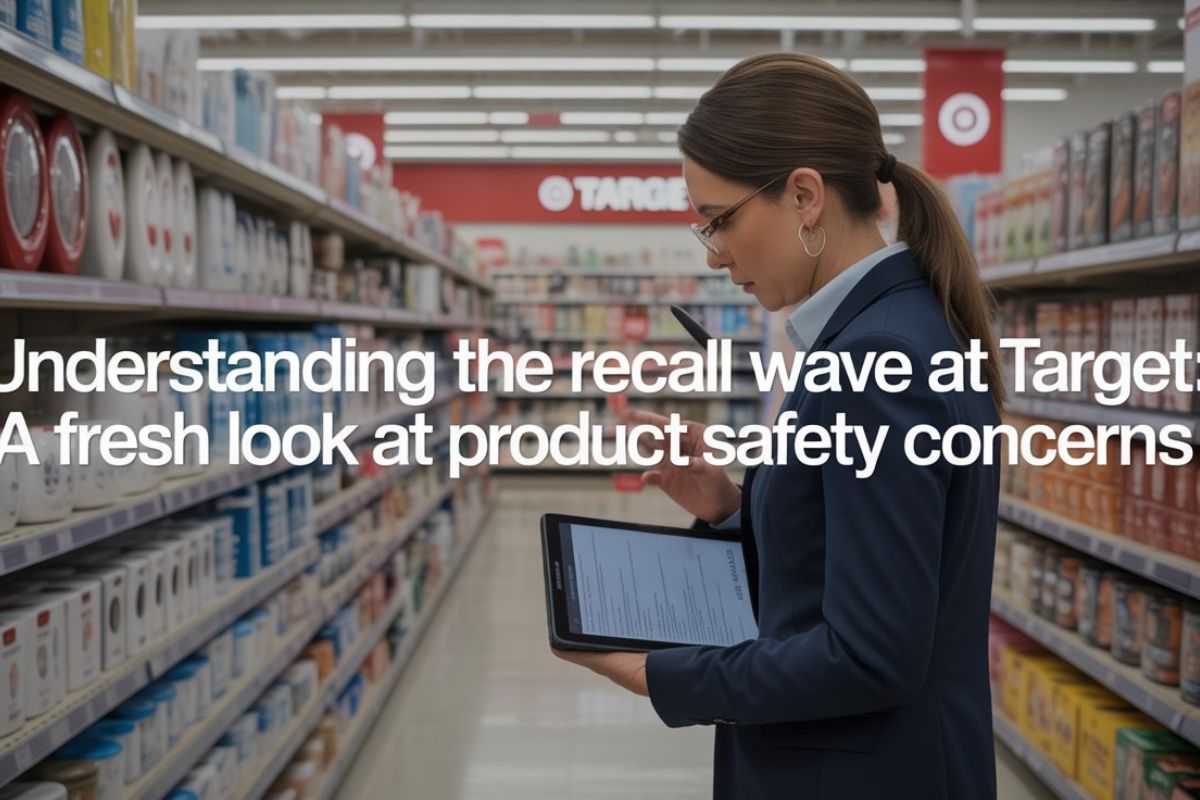
Understanding the Recall Wave at Target: A Fresh Look at Product Safety Concerns
When a major national retailer like Target issues widespread product recalls, it catches our attention not only because of the scale but also because of the scope of hazards involved.
Over recent months reports of fire‑hazards, allergen omissions and mechanical failures have surfaced in what we might label as the target product recall safety concerns list.
This article walks through the key issues and outlines how they reached that list and provides actionable advice along with real‑consumer perspectives.
Why This Matters: The Safety Landscape in 2025
Product safety standards have evolved, but the pace of innovation and global supply chains means risks still emerge.
The regulator U.S. Consumer Product Safety Commission (CPSC) continues to issue recalls when items pose serious risk of injury, fire suffocation or allergen exposure. One recent recall involved approximately 481,000 units of certain power banks due to lithium‑ion battery defects. U.S.
When such recalls hit Target’s shelves or its online marketplace it becomes especially pertinent because many households rely on the retailer for everyday goods.
The phrase target product recall safety concerns list is now more than a theoretical list; it refers to a set of real‑world products that have been flagged for safety or health concerns.
Key Recall Incidents at Target
Fire and Burn Hazards
Among the most headline‑grabbing recalls is the one centering on certain power banks from Anker. According to CPSC documentation models A1647, A1652, A1257, A1681 and A1689 were recalled because the lithium‑ion batteries may overheat, posing fire and burn hazards.
U.S. The recall date is listed as September 18 2025 covering about 481,000 units. Reported incidents include 33 fire or explosion cases, four minor burns and one case of significant property damage. U.S.
If you bought one of those units at Target or elsewhere, this is a serious alert you should act upon immediately.
Allergen and Food‑Safety Hazards
The food side of the recall picture at Target also bears attention. For example, the brand Google issued a recall for certain boxed macaroni and cheese products sold at Target and other retailers.
These items were found to contain undeclared allergens, specifically milk in a plant‑based version and cashew in another variety. People.com+1 According to reports there were eight allergic reactions tied to the items six linked to the Here Comes Truffle variety (cashew issue) and two to Vegan Is Believin (milk issue). Lookout Santa Cruz
Target’s own recall page lists these items under its Product Safety & Recalls section.
Why This Variety of Hazards?
When you scan the target product recall safety concerns list you’ll notice that hazards fall into three broad categories:
- Electrical/thermal hazards (overheating, fire).
- Mechanical or design hazards (entrapment, tip‑over, malfunction).
- Chemical or allergen hazards (undeclared allergens, contamination).
In many cases the product in question was sold through Target’s online marketplace or in stores, making it part of the broader recall environment that affects consumers who shop there.
Real User Feedback and Thoughts
One shopper shared this experience on a public forum after learning that their Anker power bank was part of the recall:
“I bought this charger from Target earlier this year and just saw the recall notice. I was charging my phone overnight and never imagined the battery could cause a fire. I’ve stopped using it and sent the photo they asked for.”
Another respondent commented on the Goodles recall:
“We bought Vegan mac‑and‑cheese for my daughter who has nut allergies. Then we saw an alert about undeclared cashews. I sent it back to Target for a refund and switched brands. Makes you worry: if a product says ‘plant‑based’ but still might contain dairy what else could slip through?”
These snippets reflect real concern among consumers. The trust that a retailer like Target builds can be shaken when a product they’ve sold enters a safety recall.
For someone relying on that product for convenience or health‑related reasons (e.g., allergen‑safe foods), the stakes are high.
How To Navigate Recalls: What You Should Do
If you suspect you have an item on the target product recall safety concerns list here are the practical steps:
Stop using the product immediately. Whether it’s a charger, a food product or a household item, if the recall notice applies to your exact model, SKU or lot code cease use. Especially in cases involving allergens or fire risk, continuing use is unwise.
Check the model lot or serial number. Manufacturers and the CPSC will list specific identifiers. For instance, the Anker recall lists model numbers and shows how the serial number appears. U.S. Similarly, for the Google recall you’ll find lot codes and best‑by dates.
Contact the manufacturer or retailer for instructions. These typically involve returning the product for a refund replacement or gift card. Many companies require you to submit photos, your contact information and the product’s details. For example Anker’s recall page requires a photo of the device with the word “recalled” written on it.
Dispose of the product safely if instructed. Especially with lithium‑ion batteries, throwing them in regular trash or recycling can be dangerous. The recall notice for the Anker units specifically warns about disposal. U.S.
Keep records and monitor for news. Even after you’ve returned or disposed of the product, hold onto receipts or documentation of your refund. Also keep an eye on whether additional items are added to the overall list of recalls for Target‑sold items.
Why This Should Be On Your Radar
The sheer volume and variety of recalls associated with major retailers like Target matter for several reasons. First, mainstream sourcing means many households could have purchased the affected items.
Second, the hazards vary widely from fire and burns to life‑threatening allergen exposure. Third, distribution through online marketplaces adds complexity; items can be sold by third‑party vendors under the Target platform so the usual in‑store screening may be less effective.
When discussing the target product recall safety concerns list you’re not just referring to a couple of oddball items. You’re referring to a pattern of consumer‑risk across categories of electronic food and household goods.
For professional content creators, SEO writers and anyone caring about consumer advocacy, this matters because of the practical reach and implications for safety trust and brand reputation.
What Companies and Retailers Are Doing
Manufacturers typically collaborate with the CPSC when issuing recalls. In the case of the Anker recall, Anker noted that although the likelihood of malfunction was minimal it was issuing a voluntary global recall out of an abundance of caution.
Retailers like Target then list affected products on their site, often under a Product Safety & Recalls page where you’ll find the affected items, lot numbers and instructions. Target’s page for Google, for example, provides those details.
From the retailer side the goal is maintaining consumer trust. But when multiple hazards surface in a short time it raises broader questions: What is the screening process for third‑party vendors? Are online marketplace items being vetted with the same rigour as in‑store items? The press coverage suggests regulators are paying attention.
How to Stay Ahead of Future Recalls
Here are a few proactive steps you can take:
- Subscribe to recall alert services such as those provided by the CPSC or via retailers.
- Regularly check your purchases, especially plug‑in electronics food items with claims (e.g., “plant based, allergen‑free”) and household goods that could be susceptible to design flaws.
- The difference lies in the kinds of risk and the required user action. A burning device demands immediate cessation and safe disposal an allergen concern demands immediate cessation and refund or product return especially for those with sensitivity.
What This Means For Target Shoppers and Content Writers
If you’re a content creator or SEO writer covering topics like product safety, consumer alerts or retail risk the phrase target product recall safety concerns list provides a relevant anchor. It conveys a tangible list of items risks and actions tied to a major retailer. Your readers likely shop at Target so the relevance is immediate.
For shoppers, it means being alert. Whether you are comparing models of chargers scanning your pantry or browsing online electronics deals the possibility of a recall should be factored into your purchase decisions and post‑purchase tracking.
Final Thoughts
The recent recalls at Target underscore that consumer safety remains a moving target (no pun intended). Electronic hazards, food allergens and design flaws all have real consequences for everyday users. The target product recall safety concerns list is more than a checklist; it reflects lived experience for some consumers and potential risk for many others.
If you have a product in your home that might match any recent recall notice, take the required steps: stop using it, verify the model or lot and follow the manufacturer’s and retailer’s instructions. Staying informed and acting quickly is your best protection.
- If you’d like I can compile and publish a full “Recent Recalls at Target” list with dates, model numbers, hazards and steps for action useful for your audience or for SEO‑driven content. Would you like me to build that?When purchasing electronics or items with batteries inspect the labels model numbers and read the safety information.
- For food items don’t rely solely on front‑of‑pack claims. Read the ingredients list, check lot codes and when in doubt about an item with health or allergy implications consider returning for exchange or refund.
- Keep receipts box information photos of items and packaging these help if there is a recall and you need proof of purchase.
Drawing the Picture: A Comparison of Recent Recalls
To put things in perspective here’s a descriptive comparison:
- The Anker power bank recall centres on electrical/thermal risk. Model numbers, tens of thousands of units, reports of fire and burns.
- The Goodles mac & cheese recall centres on allergen risk food products claiming plant‑based or vegan but found to possibly include milk or tree‑nuts.
- Both types of hazards affect different consumer priorities one is convenience/tech the other is dietary safety but both carry serious outcomes.
- The recall process is similar: identify specific items stop use return for a refund or replacement, track safe disposal where relevant.
FAQs
How can I check if my Target product is recalled?
Visit Target’s official recall page or the CPSC website and match your product’s model lot or serial number with the recall list.
What should I do if I have a recalled product from Target?
Stop using it immediately, verify its details and return it to Target or the manufacturer for a refund or replacement.
Are online and in-store Target purchases both included in recalls?
Yes recalls cover products sold through both Target stores and the online marketplace, including third-party sellers.
Can recalled food products cause serious health issues?
Yes undeclared allergens or contamination can trigger severe allergic reactions or other health risks.
How often does Target update its product recall safety concerns list?
Target updates the list regularly as new safety alerts are issued so checking the official page frequently is recommended.