Public Safety Academy Training Programs for Modern First Responders
Communities depend on well-trained professionals when emergencies occur. The foundation of that readiness often begins at a public safety academy, where first responders learn how to assess risk, act responsibly, and protect lives in high-pressure situations.
A modern public safety academy plays a crucial role in reducing harm, promoting public safety, and mitigating financial and social losses. Through structured training and real-world preparation, these academies help ensure safer outcomes for individuals, organizations, and the communities they serve.
Understanding the Role of a Public Safety Academy
A public safety academy is a specialized training institution focused on preparing individuals for roles that protect communities during emergencies. These academies support professionals in law enforcement, fire services, emergency medical response, and disaster management. Their main purpose is to ensure responders are properly trained before they face real-world risks.
Unlike general training programs, a safety academy emphasizes practical skills, decision-making, and accountability. Trainees learn how to respond to incidents in ways that protect public safety while reducing unnecessary harm and financial loss. Many academies also collaborate with public safety agencies and school districts to enhance local preparedness and foster long-term community resilience.
Why Public Safety Training Is Essential Today
Modern emergencies are more complex than ever. First responders face challenges ranging from severe weather events and large-scale accidents to mental health crises and technological threats. A well-designed public safety academy prepares them to handle these situations efficiently and safely.
Proper training helps reduce response times, improve coordination among agencies, and minimize injuries and property damage. From a financial perspective, well-trained responders also help lower insurance claims and long-term recovery costs, making communities safer and more resilient.
By staying current with modern threats, public safety academies ensure that responders can protect both lives and assets, strengthening trust between the public and emergency services.
Core Training Programs Offered by a Public Safety Academy
A public safety academy provides a variety of programs tailored to different emergency response roles. These programs ensure that responders have the knowledge and skills needed to act effectively in high-pressure situations.
Law Enforcement Training
Law enforcement programs focus on legal procedures, ethical conduct, physical fitness, and community engagement. Officers learn to assess risk, de-escalate conflicts, and protect public safety while maintaining accountability.
Fire and Rescue Training
Fire and rescue training teaches fire suppression, rescue techniques, hazardous materials handling, and building safety. These skills are critical for preventing injuries and reducing property damage, which helps minimize financial and insurance losses.
Emergency Medical Services (EMS) Training
EMS programs prepare responders to provide rapid medical care, handle trauma cases, and manage mass casualty incidents. Effective EMS training can save lives and reduce long-term healthcare costs.
Emergency Management and Disaster Response
Emergency management programs focus on disaster planning, interagency coordination, and large-scale response strategies. Trainees learn to manage resources and lead teams during natural or man-made disasters, helping communities recover faster and more efficiently.
Specialized Training for Emerging Risks
Modern emergencies often require skills beyond basic response training. Many public safety academies offer specialized programs to help first responders handle evolving threats effectively.
These advanced programs may include:
- Active threat and public violence response – Training to manage dangerous situations while protecting civilians.
- Crisis intervention and mental health response – Preparing responders to handle mental health emergencies safely.
- Leadership and incident command training – Developing skills for managing teams and coordinating large-scale operations.
- Technology and communication systems – Teaching the use of modern tools for faster, more accurate responses.
Specialized training ensures that responders can adapt to new risks without compromising safety. For communities and insurers, this means fewer accidents, reduced financial losses, and improved public confidence in emergency services.
Training Methods Used in a Modern Safety Academy
A public safety academy combines multiple training methods to ensure responders are prepared for real-world emergencies. These methods go beyond traditional classroom instruction to create hands-on, practical learning experiences.
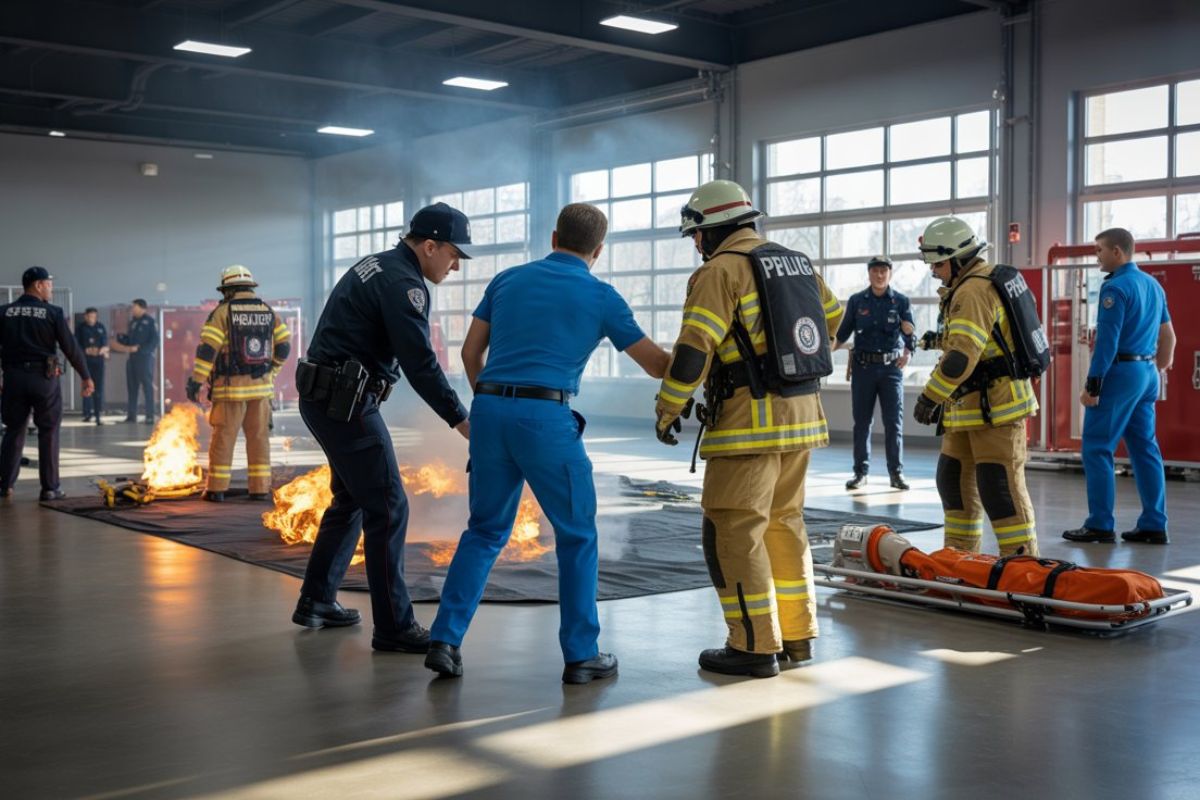
- Scenario-based simulations: Trainees practice decision-making in realistic emergency situations.
- Hands-on field exercises: Responders develop physical skills and teamwork through practical drills.
- Classroom instruction and assessments: Core knowledge, procedures, and regulations are taught and evaluated.
- Technology-driven training: Virtual tools and digital simulations allow safe practice of high-risk scenarios.
By blending these approaches, a public safety academy helps first responders gain confidence, reduce mistakes, and improve overall effectiveness. This combination of skills and preparedness also supports community safety and reduces long-term financial risks associated with emergencies.
The Connection Between Public Safety and Financial Protection
Training at a public safety academy does more than improve emergency response; it also plays a key role in financial protection and risk management. Well-prepared first responders help prevent small incidents from escalating into costly emergencies, protecting both people and property.
Communities benefit in several ways:
- Lower injury-related costs – Fewer accidents mean reduced medical expenses.
- Reduced property damage – Effective response minimizes losses from fires, floods, or other disasters.
- Faster emergency resolution – Quick, organized action helps limit long-term economic impact.
- Stronger public trust – Reliable emergency services reinforce confidence in safety systems.
By emphasizing prevention, preparedness, and accountability, public safety academies support both community safety and financial stability, making them a critical component in managing risks.
Public Safety Education and School Districts
Some public safety academies collaborate with school districts to introduce students to emergency preparedness and public safety careers. These programs help young people understand the importance of risk awareness, responsibility, and community protection from an early age.
By engaging with schools, academies not only promote future careers in public safety but also strengthen overall community resilience. Students gain knowledge about safety procedures, emergency response, and how trained professionals help reduce financial and social risks during crises.
Early exposure to public safety principles fosters a culture of preparedness, ensuring that communities are better equipped to handle emergencies and minimize potential losses.
Choosing the Right Public Safety Academy
Selecting the right public safety academy is essential for ensuring high-quality training and effective emergency preparedness. Not all academies provide the same level of instruction, resources, or specialization, so careful evaluation is important.
Key factors to consider include:
- Accreditation and certifications – Ensures the academy meets recognized training standards.
- Instructor experience – Experienced trainers provide practical insights and real-world knowledge.
- Facilities and resources – Modern equipment and simulation tools enhance learning.
- Program relevance and flexibility – Courses should match the specific needs of different first responder roles.
A strong academy invests in comprehensive, up-to-date training, preparing responders to handle emergencies efficiently while reducing risks to public safety and finances.
Final Thoughts
A public safety academy is more than a training center; it is a cornerstone of community safety, risk awareness, and financial protection. By equipping first responders with the skills, knowledge, and confidence to handle modern emergencies, these academies help minimize harm, reduce property damage, and improve long-term recovery outcomes.
Investing in high-quality training ensures that responders are prepared for evolving threats, communities are safer, and public trust is strengthened. Understanding the role of a public safety academy highlights the connection between preparedness, safety, and financial stability, showing that proper training benefits everyone.
FAQs
What is a public safety academy?
A public safety academy is a specialized institution that trains first responders, such as police officers, firefighters, EMTs, and emergency management professionals, to handle emergencies safely and effectively.
Who can attend a public safety academy?
Individuals pursuing careers in law enforcement, fire services, emergency medical services, or disaster management are eligible. Some academies also offer programs for students in school districts interested in public safety careers.
How long does training at a public safety academy typically last?
Training programs vary by role. Basic law enforcement or firefighter programs can last several months, while advanced or specialized training may continue for weeks or require ongoing professional development.
What types of courses are offered at a public safety academy?
Courses typically include law enforcement, fire and rescue, emergency medical services, disaster response, crisis intervention, leadership, and technology-based emergency management.
Why is scenario-based training important?
Scenario-based training allows trainees to practice real-world decision-making in controlled environments, improving confidence, reducing errors, and enhancing preparedness for actual emergencies.
How does a public safety academy help reduce financial risks?
Well-trained first responders minimize property damage, prevent injuries, and improve emergency resolution, which can lower insurance claims and long-term recovery costs.
Do public safety academies collaborate with school districts?
Yes, many academies partner with school districts to provide early education on emergency preparedness, safety awareness, and potential career paths in public safety.
What specialized training programs are available?
Specialized programs can include active threat response, mental health crisis intervention, leadership and incident command, and the use of advanced communication and technology systems.
How do public safety academies prepare responders for disasters?
Academies teach disaster planning, interagency coordination, resource management, and large-scale emergency response to ensure communities recover quickly and efficiently.
What should I consider when choosing a public safety academy?
Important factors include accreditation, instructor experience, facilities, available resources, course relevance, and the flexibility to specialize in different emergency response roles.
Can public safety academy training improve community trust?
Yes. Well-trained first responders act confidently, efficiently, and ethically, which strengthens public trust in emergency services and community safety systems.
Is continuous training required after graduation?
Yes. Many first responders return for refresher courses, advanced certifications, or specialized programs to stay updated on evolving threats and emergency response techniques.