
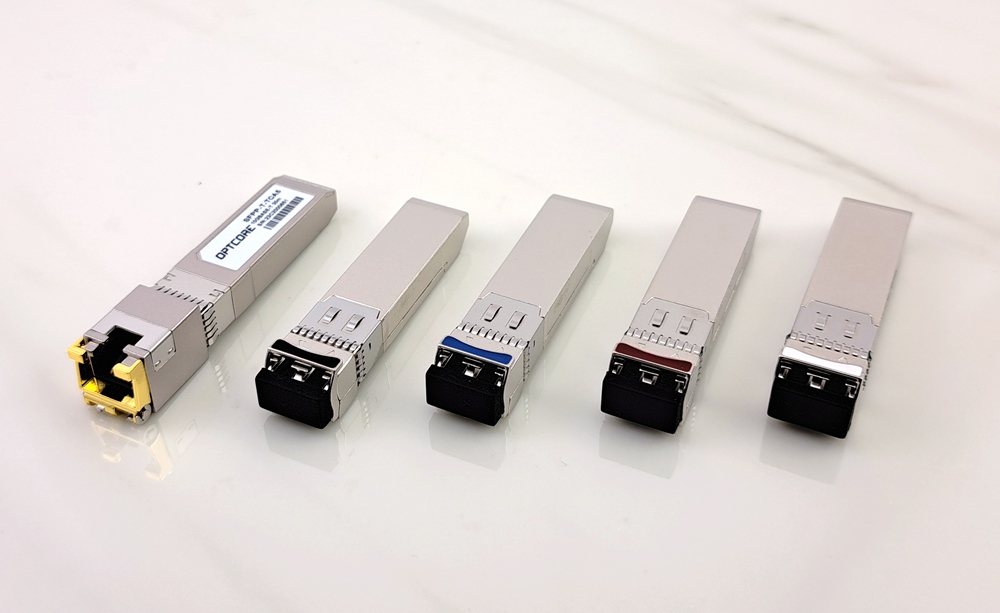
Understanding SFP+ Modules for 10G Networking
SFP+ modules have become a cornerstone of modern networking, offering the high-speed connectivity needed for today’s bandwidth-hungry applications. Whether you are setting up a small enterprise network, managing a data center, or just future-proofing your IT infrastructure, understanding these compact yet powerful components is critical. This guide will walk you through everything you need to know about 10G SFP+ modules, from how they work to the different types available and how to choose the right one for your specific needs.
SFP vs. SFP+: What’s the Difference?
Before diving into the specifics of 10-gigabit optics, it’s important to clarify the distinction between standard SFP (Small Form-factor Pluggable) and its enhanced counterpart, SFP+. The original SFP standard was designed to support data rates up to 1 Gbps and is widely used for Gigabit Ethernet connections across enterprise networks. SFP+ is an improved version that supports speeds up to 10 Gbps, making it an ideal choice for high-speed data center applications and telecommunications systems. Both standards share the same physical footprint, and many modern switches are built with SFP+ ports that are backward-compatible with standard 1G SFP modules.
One of the most valuable features of both SFP and SFP+ modules is their hot-swappable nature. You can insert or remove a module from a live switch or router without powering down the device, which significantly reduces network downtime during maintenance and upgrades. This modular approach also allows network administrators to mix and match different media types—fiber and copper—on a port-by-port basis, paying only for what they need as they expand.
Key Specifications of SFP+ Modules
When evaluating SFP+ modules, several technical specifications determine how they will perform in your network:
Data Rate: As the name suggests, SFP+ modules support up to 10 Gbps, with some variants capable of reaching 11.1 Gbps for protocols like CPRI (Common Public Radio Interface).
Wavelength: Measured in nanometers (nm), this indicates the light frequency at which the module operates. Multimode modules typically use 850 nm, while single-mode modules operate at 1310 nm or 1550 nm.
Distance: Transmission range varies dramatically based on fiber type and module class. Multimode solutions cover distances up to a few hundred meters, whereas single-mode optics can reach tens or even hundreds of kilometers.
Fiber Type: Multimode fiber (MMF) is used for shorter distances within buildings or data centers, while single-mode fiber (SMF) is reserved for longer-haul transmissions.
Connector Type: The vast majority of SFP+ fiber modules use LC duplex connectors as the standard interface.
Digital Diagnostic Monitoring (DDM): Many SFP+ modules support DDM, which enables real-time monitoring of critical parameters including temperature, supply voltage, laser bias current, and optical receive power.
Types of 10G SFP+ Modules
The 10 Gigabit Ethernet standard encompasses several transceiver types, each designed for specific distance and fiber requirements. The naming conventions—SR, LR, ER, ZR, and others—directly indicate the intended reach of each module.
10GBASE-SR (Short Range) modules are the most common choice for intra-rack and building backbone connections. Operating at 850 nm, these modules use Vertical Cavity Surface Emitting Laser (VCSEL) technology and are designed exclusively for multimode fiber. A standard 10GBASE-SR SFP+ module reaches up to 300 meters on OM3 multimode fiber and up to 400 meters on OM4 fiber. For shorter legacy multimode fiber such as OM1 (62.5 μm), the supported distance drops to approximately 33 meters. One popular variant in this category is the SFP-10G-SR-S, a Cisco-compatible module that delivers enterprise-grade connectivity over multimode fiber with very low power consumption—typically around 1 watt—making it a go-to choice for dense switch deployments.
10GBASE-LR (Long Range) modules operate at 1310 nm and are designed for single-mode fiber, supporting distances up to 10 kilometers. These are ideal for connecting buildings across a campus or for metro area network applications. 10GBASE-ER (Extended Range) pushes the distance envelope further, using a 1550 nm wavelength to achieve up to 40 kilometers on single-mode fiber. For the longest standard links, 10GBASE-ZR (Ze best Range) modules—while not an official IEEE standard—can reach up to 80 kilometers by leveraging 1550 nm optics and, in some cases, dispersion compensation mechanisms.
10GBASE-LRM (Long Reach Multimode) occupies a middle ground, designed to support distances up to 220 meters over legacy multimode fiber using a 1310 nm wavelength. This type is particularly useful when upgrading existing multimode infrastructure without replacing the installed fiber plant.
For copper-based connections, 10GBASE-T SFP+ modules exist, but they come with significant power and heat trade-offs. These modules convert the SFP+ interface to a standard RJ45 port, supporting 10G Ethernet over Category 6a or Category 7 copper cabling, albeit with higher power consumption and shorter reach—typically up to 30 meters for 10G links.
Compatibility and Vendor Considerations
One of the most common concerns when purchasing SFP+ modules is compatibility. While the MSA ensures physical and electrical interoperability, some switch manufacturers—most notably Cisco—implement proprietary coding in their firmware to limit the use of third-party optics. Many network operators successfully use third-party modules in Cisco equipment, but it’s important to verify compatibility beforehand or choose a vendor that offers a Cisco-compatible version of the transceiver. The SFP-10G-SR-S mentioned earlier is exactly such a variant, specifically engineered to work seamlessly with Cisco brand switches and routers while delivering the same 10GBASE-SR performance over multimode fiber.
To avoid unexpected “non-certified transceiver” warnings during switch boot-up, consider either using OEM modules for mission-critical core links or thoroughly testing third-party modules in a staging environment before production deployment.
Making the Right Choice
Selecting the appropriate 10G SFP+ transceiver ultimately comes down to three factors: the distance between the two network devices, the type of fiber already installed, and the specific switch platform you are using. For same-rack or same-row connections within a data center, a 10GBASE-SR SFP+ paired with OM4 multimode fiber provides an unbeatable balance of cost and performance. For links spanning multiple buildings or long corridors, a 10GBASE-LR single-mode transceiver is the correct choice. If your infrastructure relies on legacy 62.5 μm multimode fiber, the 10GBASE-LRM module can often save you from an expensive fiber replacement project.
For Cisco shop environments, the SFP-10G-SR-S is a reliable, energy-efficient workhorse that delivers consistent results over multimode fiber, while the broader 10G SFP+ ecosystem offers enough flexibility to cover almost any conceivable 10-gigabit link scenario, from inside the data center to metro-area spans of 80 kilometers or more.
Final Thoughts
10-gigabit networking is no longer a luxury reserved for large enterprises—it has become a practical and necessary upgrade for businesses of all sizes as traffic demands continue to grow. SFP+ modules offer a flexible, hot-swappable, and cost-effective way to unlock 10G speeds across your existing infrastructure. From the short-reach versatility of 10GBASE-SR SFP+ modules and the Cisco-tailored SFP-10G-SR-S to the long-haul capabilities of LR, ER, and ZR variants, there is a transceiver designed for nearly every situation. By understanding the specifications, matching the module type to your fiber plant, and following best practices for compatibility and handling, you can build a robust, high-performance network ready to handle the bandwidth demands of 2025 and beyond.
Stay in touch to get more updates & news on Juntosseguros!