Florida Immigration Law Injunction what happened why it matters and what comes next
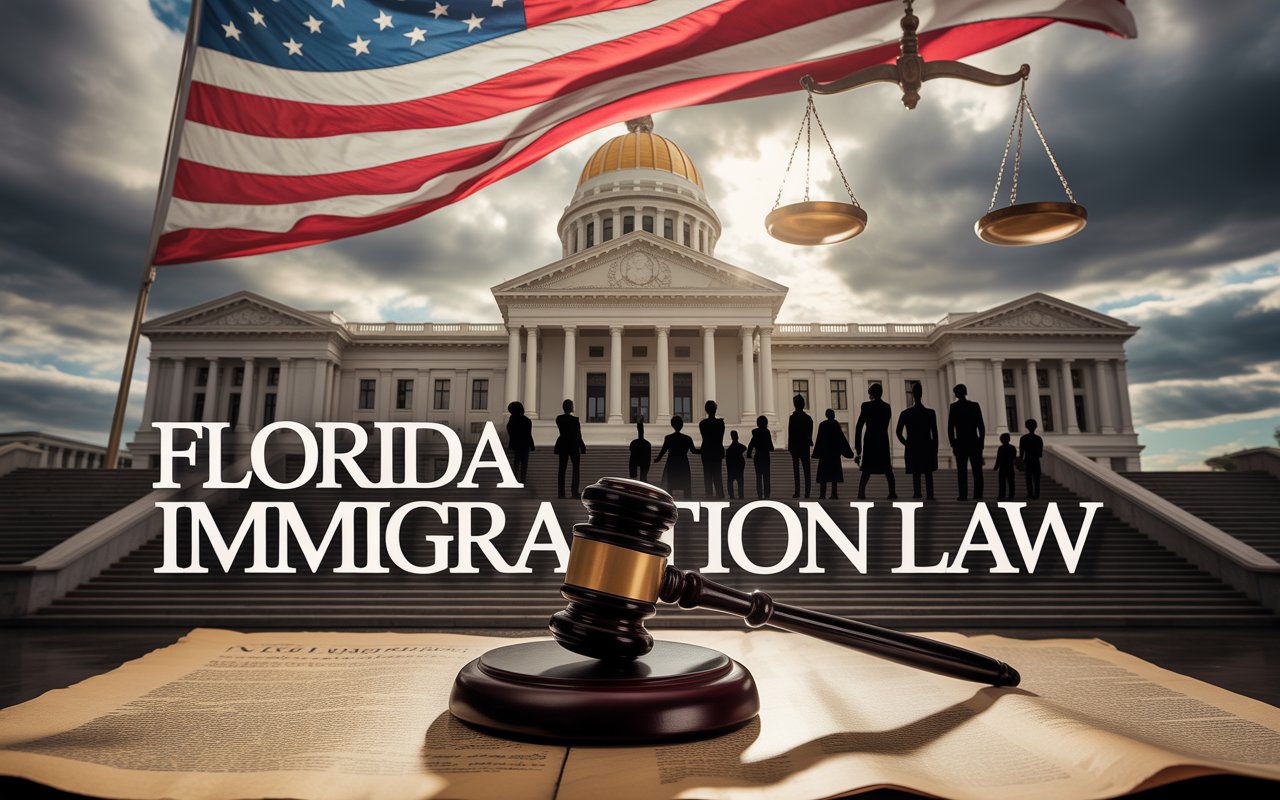
In spring 2025 Florida enacted Senate Bill 4C a tough immigration measure targeting undocumented entry.The law imposed mandatory detention and prison time for those re entering the state without legal status. Federal judges swiftly issued a Florida immigration law injunction stopping the law before it took effect.
The district court ruled it likely violated federal supremacy over immigration policy. An appeals court upheld that Florida immigration law injunction citing constitutional concerns.The Supreme Court then declined Florida’s emergency bid to enforce the statute Legal experts see the injunction.
reaffirmation of federal authority on immigration matters. Advocates warn the law if enacted would harm immigrant families and local communities.This ongoing Florida immigration law injunction battle underscores deep national divides on immigration power.
What SB 4C sought to do and why it raised alarms
In February 2025 Florida passed Senate Bill 4C SB 4C creating new state crimes for unauthorized entry or re entry into the state with mandatory detention and prison terms for repeat offenders Florida Immigration Law Injunction.
The law empowered local police to arrest people based on suspected immigration status and restricted prosecutorial discretion. Civil rights groups warned it would fuel racial profiling and conflict with federal immigration policy.
Soon after the Florida Immigrant Coalition the Farmworker Association of Florida and affected individuals filed a federal class action arguing that immigration enforcement is a federal responsibility and Nationality Act.
The district court steps in temporary restraining order and preliminary injunction
US District Judge Kathleen M Williams in Miami granted a temporary restraining order in early April 2025 then issued a detailed 49 page preliminary injunction at the end of April finding that the plaintiffs were likely to succeed on the merits. Judge Williams reasoned that SB 4C created a separate state enforcement regime for conduct already governed by federal law.
imposed mandatory detention that conflicted with federal discretion and sentencing schemes and would permit state prosecutions even while federal immigration proceedings were underway creating direct conflicts with federal authority. The court also flagged Fourth Amendment and due process concerns if arrests occurred under a law the court had enjoined.
The injunction prevented state officials from implementing SB 4C while the lawsuit continues. Judge Williams also set a schedule to address whether Florida Attorney General James Uthmeier should be held in contempt for communications that allegedly encouraged enforcement despite the restraining order Florida Immigration Law Injunction.
The contempt question underscored a practical tension courts can issue an injunction but enforcement actors on the ground must comply and official statements encouraging otherwise can create constitutional and enforcement chaos.
The appeals and the Supreme Court’s emergency action
Florida immediately appealed the injunction. The 11th US Circuit Court of Appeals denied the states request to stay the district courts order on June 6 2025 concluding that federal law has a longstanding and distinct interest in regulating the admission and exclusion of aliens and that SB 4C likely is trumped by federal statutes.
The 11th Circuit agreed to expedite review and set oral argument on the merits for a later date. Florida then sought emergency relief from the US Supreme Court. On July 9 2025 the Court issued a brief unsigned order denying Florida’s application to reinstate enforcement of SB 4C while litigation continues.
The Supreme Court provided no explanation and no dissent was recorded an outcome that left the district court’s injunction in force and effectively kept the law on hold nationwide for the duration of the litigation. Legal analysts and advocates cited the decision as another affirmation of the principle that immigration enforcement is primarily a federal function Florida Immigration Law Injunction..
Why the courts found the law likely preempted the legal reasoning
The injunction centers on federal preemption as the Constitution gives the federal government exclusive authority over immigration through the Immigration and Nationality Act INA. Judge Williams found that Florida’s SB 4C unlawfully created a parallel immigration enforcement system.
conflicting with federal law and undermining federal discretion. The court ruled this likely violated the Supremacy Clause and supported conflict preemption under Arizona. United States. The injunction also cited concerns under the Dormant Commerce Clause and the right to interstate travel.
noting that criminalizing movement into Florida could burden commerce and mobility. Additionally Judge Williams raised Fourth Amendment and due process issues warning that arrests under the blocked law could lead to unconstitutional detentions and violations of basic legal protections.
Human impact what affected people and rights groups say
Civil rights groups hailed the injunction as a crucial defense of constitutional limits on state power. The ACLU called the Supreme Court’s refusal to lift the block a rejection of an unconstitutional and discriminatory effort that could lead to racial profiling and civil rights abuses.
While SB 4C remains suspended reports from Human Rights Watch and others show it has already spread fear in immigrant communities and exposed people to abusive treatment. Advocates warned that merging local policing with immigration
Enforcement creates serious human and systemic risks In public hearings and statements ACLU leaders and plaintiffs’ attorneys said the Florida immigration law injunction reaffirms that states cannot regulate immigration protecting fundamental rights as the case proceeds.
User reviews and real world reactions
In the legal and policy debate user reviews refer to real testimonies from people affected by the law. Plaintiffs and community advocates described the injunction as a lifeline for families fearing detention while nonprofits reported surges in calls from anxious residents.
Human Rights Watch documented stories of detention family instability and lost livelihoods caused by SB 4C’s chilling effect. Supporters including state officials like Acting Solicitor General Jeffrey DeSousa defended the law as a necessary response to unlawful migration.
argued it mirrored federal standards. However courts have remained skeptical finding that such state measures conflict with the federal immigration framework a key issue driving the Florida immigration law injunction debate Florida Immigration Law Injunction.
Contempt and compliance enforcement behavior matters
The litigation has produced more than legal briefs and oral arguments. Judge Williams ordered a show cause process to determine whether Attorney General Uthmeier had defied the temporary restraining order by advising law enforcement agencies that they could continue enforcing SB 4C Florida Immigration Law Injunction.
The contempt question underscored a practical problem injunctions protect rights only if enforcement actors comply. Reports indicate the court considered sanctions because statements from state officials could have prompted arrests under a law the court had enjoined raising the possibility Florida Immigration Law Injunction.
unconstitutional detentions Contempt findings are rare but powerful tools courts use to preserve the rule of law and ensure that judicial orders are meaningful on the ground. Those enforcement dynamics matter for anyone tracking the case’s real world effects Florida Immigration Law Injunction.
Broader legal and policy implications
The injunction and Supreme Court’s refusal to reinstate Florida’s SB 4C reaffirm long standing limits on state involvement in immigration enforcement. As in Arizona v. United States 2012 Florida Immigration Law Injunction.
The courts emphasize that immigration is a federal responsibility. Allowing state laws like SB 4C would create a fragmented system with conflicting enforcement standards complicating federal Florida Immigration Law Injunction.
policy and legal uniformity The case reflects the ongoing tension between state efforts to address migration and constitutional limits protecting federal supremacy over immigration and foreign affairs Florida Immigration Law Injunction.
What to expect next in the litigation
The 11th Circuit has expedited review of SB 4C with oral arguments scheduled and related motions pending in district court. For now the injunction keeps the law unenforceable while Florida Immigration Law Injunction.
constitutional issues are reviewed. If higher courts uphold the injunction Florida could be permanently barred from enforcing SB 4C if reversed parts of the law may take effect Florida Immigration Law Injunction.
Given strong preemption precedents and past failures of similar state laws Florida faces an uphill battle though final outcomes remain uncertain Florida Immigration Law Injunction.
Practical guidance for communities employers and journalists
For community groups and affected people the injunction provides temporary protection from SB 4C enforcement.Individuals worried about immigration enforcement should seek qualified legal counsel and rely on trusted advocacy organizations for reliable updates.Employers and local governments should be careful.
Policies and training that encourage cooperation with federal immigration authorities must still respect constitutional protections and local limits on enforcement. Journalists covering the story should prioritize primary documents court orders filings and transcripts.
when reporting about what officials can and cannot do under the injunction. Public statements from state officials and advocacy groups are useful but the operative legal effect derives from the court orders themselves and how enforcement actors comply with them.
Why this matter matters beyond Florida
The litigation over SB 4C matters nationally because it tests whether states can build parallel immigration regimes with criminal enforcement and mandatory detention. The court’s response will influence legislative strategies in other states and shape how federal and local.
officials coordinate on immigration enforcement. Moreover the case speaks to larger themes in American governance how authority is divided between state and federal governments how rights are protected in times of political strain and how courts manage high stakes.
disputes that combine criminal law civil rights and national policy. The injunction sends a clear signal that courts will scrutinize state efforts that appear to displace federal priorities or to produce constitutional harms Florida Immigration Law Injunction.
Final Thought
The Florida immigration law injunction is a living legal story with immediate human consequences and wide constitutional implications. A federal district judge found that SB 4C is likely preempted by federal immigration law and enjoined enforcement.
The 11th Circuit denied a stay and the US Supreme Court refused emergency relief leaving the injunction intact while the case proceeded. Those developments preserve constitutional protections for people in Florida while courts undertake a full legal review.
If you’re covering or following this issue prioritize primary court documents monitor scheduled appeals court arguments and treat public statements about enforcement with caution what matters legally is what the courts order and whether enforcement actors comply.
FAQ’s
What is the Florida immigration law SB 4C?
SB 4C is a state law passed in 2025 that makes it a crime for undocumented immigrants to enter or re enter Florida. It also mandates pretrial detention and allows state police to arrest individuals based on immigration status powers normally reserved for federal authorities.
Why did the court issue an injunction against SB 4C?
Federal courts blocked SB 4C because immigration enforcement is a federal responsibility under the US Constitution. The district court ruled that the Florida law likely conflicts with federal immigration statutes and violates constitutional rights like due process and freedom of movement.
What did the US Supreme Court decide?
On July 9 2025 the Supreme Court denied Florida’s emergency request to enforce SB 4C while the case continues. This means the law remains blocked and state officials cannot arrest or detain people under it. The Court gave no written explanation and no justices dissented.
Who challenged the Florida immigration law?
The Florida Immigrant Coalition the Farmworker Association of Florida and several affected individuals brought the lawsuit with support from the ACLU and Americans for Immigrant Justice. They argued that SB 4C violated federal supremacy and endangered immigrant communities through racial profiling and unlawful arrests.
How does this injunction affect immigrants in Florida?
The injunction protects immigrants from being arrested or prosecuted under SB 4C. It also reassures community members that immigration enforcement remains under federal not state control. Advocacy groups say the ruling prevents family separations unjust detentions and local profiling.
What happens next in this case?
The US Court of Appeals for the 11th Circuit will hear the full case to decide whether the injunction becomes permanent. Depending on the outcome the case could return to the Supreme Court for a final ruling. Until then SB 4C remains unenforceable across Florida.