
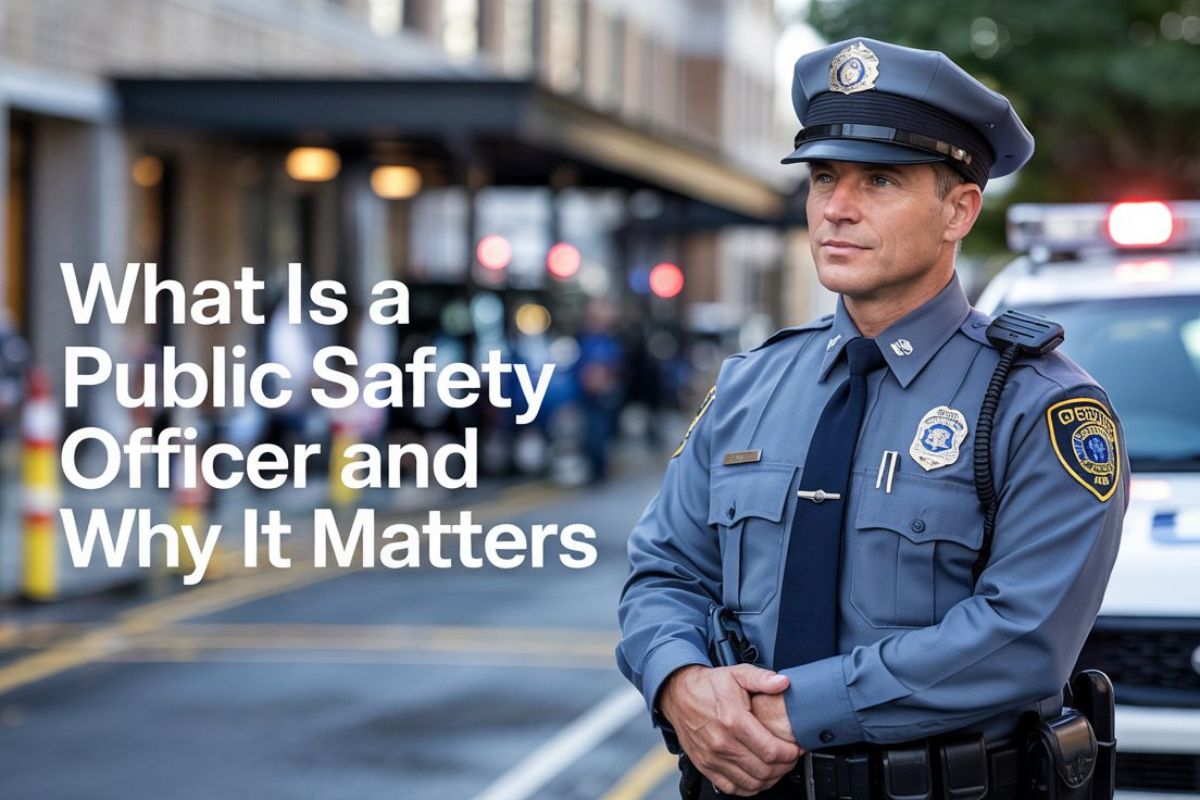
What Is a Public Safety Officer and Why It Matters
A public safety officer is a professional whose primary task is to protect people and property through patrolling, emergency response enforcement of security policies and proactive prevention. While the term public safety officer may sound fairly straightforward the reality of the job is broad and varied depending on employer jurisdiction, training and authority.
In essence a public safety officer provides a sense of assurance and security for individuals in settings ranging from campuses and hospitals to corporate offices, government buildings and large residential communities. They perform work that helps people live, work and play in safe, secure environments. Considering a career in this field means choosing a path of service and responsibility. The role is both valued and challenging.
The Role and Daily Activities of a Public Safety Officer
When asking what is a public safety officer? it helps to look at what their typical day might involve. Although no two days are exactly the same, you’ll find common threads.
On any given shift a public safety officer may patrol a designated area on foot, bicycle or in a vehicle keeping a visible presence to discourage crime and ensure safety. They may inspect facilities, entrances, parking lots or access points looking for safety hazards or security vulnerabilities. Monitoring through cameras or technology might supplement physical patrols.
In the cause of emergency response they might act as first responders to incidents such as a medical crisis, fire alarm activation, accident theft or other disturbances. Some roles require the officer to administer first aid or CPR until paramedics arrive. Coordination with local fire departments, EMS and law enforcement is often part of the job.
On the security and enforcement side a public safety officer typically monitors activity, enforces rules or regulations (which may be institutional policies or state laws depending on employer), and maintains control of access points.
They might investigate suspicious behavior, conduct interviews, prepare incident or investigation reports and in some cases apprehend or detain suspects while awaiting law enforcement.
Assistance to the public is another key element. The officer may serve as a first point of contact for visitors, students, employees or residents providing directions helping with minor issues, and creating a friendly but professional presence. Reporting is critical for every incident, every suspicious activity and every daily patrol entry may need to be documented accurately.
Because of these combined responsibilities patrolling monitoring, assisting, enforcing a public safety officer must be ready to adapt. The role also bridges between unarmed security and full‑law‑enforcement depending on employer and jurisdiction.
Work Environments Where Public Safety Officers Operate
The workplace of a public safety officer can vary widely. Some common settings include colleges and universities, hospitals and healthcare facilities, large offices or corporate campuses, museums, residential communities with gated access and government buildings or agencies.
For example at a university a public safety officer might be responsible for student and faculty safety event security monitoring parking lots responding to alarms and interacting regularly with campus police. At a hospital the officer might handle facility access, monitor patient‑visitor flow support emergency evacuations or coordinate with hospital security and EMS.
In a corporate environment security may focus more heavily on entrances, critical assets, sensitive data, and visitor screening, but the fundamental duties remain: patrol, monitor, assist, report and enforce. In government agencies particularly those labelled public safety the role may take on additional enforcement or regulatory dimensions.
It’s important for anyone considering a career in this field to understand which type of institution they would prefer: one centered on hospitality and assistance (e.g., campus residential) or one leaning toward enforcement and regulatory response (e.g., government, institutional). The daily rhythms and demands will differ accordingly.
Qualifications Training and Career Pathways
For many public safety officer roles, the minimum education requirement is a high school diploma or GED. However some employers prefer or require related degrees (for example in criminal justice, public safety management or security studies) to offer a competitive edge.
A thorough background check is standard. Because the role deals with safety, security and in some cases enforcement employers typically look for candidates with good physical and mental health, a clean record, strong observation and communication skills and the capacity to remain calm in stressful situations.
Training also plays a key role. Specialized training programs or academies may be required, especially if the role includes law‑enforcement authority. One example in the U.S. is the Texas Department of Public Safety (DPS).
Their career listings highlight that candidates must complete a physical readiness test, written exam, background investigation, medical and psychological evaluation. dps.texas.gov+2dps.texas.gov+2 For someone looking at public safety officer careers in Texas, this gives a concrete example of the level of commitment expected.
Training coursework might include criminal procedures, criminology, investigative report writing, public policy and risk reduction. These build the knowledge foundation to apply practical security duties in complex environments. Advancement typically comes through gaining experience, further certifications, supervisory training and perhaps transitioning into enforcement or management roles.
Types of Public Safety Officer Roles & Authority
When exploring public safety officer jobs, it helps to recognise the variations in authority, specialization and scope. One major distinction is between armed vs. unarmed officers. Some officers carry firearms and have arrest authority (making them similar in function to law‑enforcement personnel) while others focus strictly on security and emergency response without weapons.
Another distinction is between sworn and civilian roles. Sworn public safety officers are granted legal authority similar to police in some ways whereas civilian officers perform security monitoring and response functions without law‑enforcement powers.
Some roles are highly specialized, for instance a public safety officer might focus specifically on fire suppression, emergency medical response, rescue operations or critical asset protection.
For someone entering the profession, understanding which category a given position falls under helps set realistic expectations about duties training risk and career development.
Compensation and Job Outlook
A core question many candidates ask is: what is the public safety officer salary? According to national salary data the average pay for public safety officers varies significantly depending on location, employer level of responsibility and authority.
One source reports average hourly pay of about $23.14 in the United States. Indeed Another data set suggests an average annual salary of around $54,758 per year in the U.S. Glassdoor
These numbers reflect broad averages; actual pay can be higher or lower depending on many factors. For example the average hourly rate in California is about $27.84 for public safety officers. Indeed One summary site lists the average U.S. public safety officer salary at approximately $39,969 per year or about $19.22 per hour for entry‑level roles. Talent.com
Because of this variation, it’s helpful to compare typical roles side by side in broad terms:
- Entry‑level positions with fewer enforcement duties tend to pay at or below the national average.
- Roles with law‑enforcement authority, shift work, risk exposure or specialized training tend to pay more.
- Geographic cost of living and employer type (public vs. private) influence pay significantly.
Regarding job outlook while precise data for public safety officers as a distinct category is limited, related occupations such as police and detectives are projected to grow about 3 % from 2024 to 2034.
bls.gov This suggests that positions which help protect communities and property remain relevant but competition and evolving roles (with technology, integration of public health and safety and private‑public partnerships) make ongoing training and specialization important.
Careers and Job Options: Public Safety Officer Jobs & Beyond
If you are exploring public safety officer careers you’ll find a range of job options. Employers include universities, hospitals , large corporations, museums, gated communities and government agencies. A number of roles are posted by the Texas Department of Public Safety which demonstrates state‑level effort in recruitment. Indeed+1
When looking for a position, it’s useful to search under terms like public safety officer security public safety officer public safety office” (or “office” if referring to the organisational unit), and even broader functions such as campus safety or facility security.
In Texas for instance you may find openings at the Texas Department of Public Safety office locations for driver‑license services and within their human‑resource operations. dps.texas.gov+1
Advancement often leads from being an officer to supervisory or managerial roles, or into specialised response units (for example fire or rescue‑trained).
Some officers may transition into full policing careers or other public safety branches as experience accrues. As with any career, aligning your goals, location preference, training and employer type helps open the best path.
Real‑World Insights: Reviews and Thoughts from Officers
Hearing from people in the role adds authenticity and helps you see the practical side. One officer reported via Reddit:
Average seems to be around 15 dollars an hour for sub 5 years experience which makes up the bulk of uniformed police officers. Reddit
While that comment references policing rather than every public safety officer role it reflects the fact that early‑career pay can be modest unless specialized training or enforcement authority is involved.
Other review sources suggest that job satisfaction among public safety officers is relatively strong despite heavy demands one survey noted around 70 % of officers felt they were fairly compensated given the job’s demands. Glassdoor+1
From a practical perspective these are key take‑aways:
- Expect shift work including nights, weekends and holidays.
- Prepare to respond to emergencies the job is not purely routine patrol.
- Training, communication skills and composure under pressure are critical.
- Career advancement and higher pay often require additional credentials, enforcement authority or supervisory responsibility.
Understanding these realities helps you move into the role with eyes open and positions you to build a sustainable and satisfying career.
What to Consider Before You Apply
If you’re seriously considering the role of public safety officer here are important factors to weigh:
Authority and duties: Will you have arrest powers? Will you carry a weapon? Some roles are more like armed security or sworn officers; others are unarmed and focused on assistance and monitoring.
Employer type and environment: A university campus hospital corporate facility or residential community each present different daily rhythms and expectations.
Training and credentialing: Are you ready to invest in the required training? If enforcement authority is required you may have to undergo physical tests, background checks, psychological screening and perhaps an academy program.
Shift schedule and lifestyle: Many roles are 24/7 operations. Nights, holidays and overtime may be part of the job.
Growth and advancement: What opportunities are available for promotion, specialization or transition into other public‑safety roles? Does the employer support continuing education or credential upgrades?
Location and compensation: Understand the salary norms in your area, cost of living and how local employers structure pay. A role in Texas might differ significantly from one in California or New York.
Public Safety Officer in the Texas Context
For those living in or wanting to work in Texas it’s worth noting that the Texas Department of Public Safety plays a significant role in statewide public safety operations. The agency is actively recruiting and emphasises a workforce built on integrity excellence , accountability and teamwork. dps.texas.gov+1
If you’re looking for public safety officer jobs in Texas, the Texas DPS offers opportunities and posts listings through its careers page.
ZipRecruiter+1 Because the agency also manages driver license services some locations of the Texas Department of Public Safety driver license office in Texas may include public‑safety or security‑oriented positions though these are distinct from patrol or enforcement roles.
For example you may find staff positions at public safety driver license office locations such as the Greenville TX office which ties into the broader infrastructure.
By investigating the specific duties at the office location you apply to, you can clarify whether the role leans more toward facility‐security/administrative or toward patrol and enforcement. This ensures the job aligns with your expectations and career goals.
Summary
Becoming a public safety officer means stepping into a role of service responsibility and sometimes challenge. The job combines patrolling emergency response security enforcement assistance reporting and public interaction.
It spans many types of environments: universities, hospitals, corporate campuses, government buildings and more.
Compensation varies widely depending on the nature of the role, its authority, location and employer. While average figures provide a benchmark, real pay may differ. Career advancement is available and often linked to training, credentials and performance.
If you’re drawn to the idea of helping keep people safe and have the qualities required for observation, integrity, composure , and communication then a career as a public safety officer can be both meaningful and rewarding.
Particularly in regions like Texas where the state public safety agency actively recruits opportunities to motivate candidates.
If you like, I could pull together a job‑description template application checklist and training pathway tailored for Texas or another region you’re interested in. Would you like me to do that next?
FAQs:
What is the difference between a public safety officer and a police officer?
A public safety officer may handle security emergency response and patrol duties while police officers focus primarily on law enforcement and arrests.
Do all public safety officers carry weapons?
No. Some roles are unarmed and focus on security and emergency response while others are armed and have law enforcement authority.
What types of training are required to become a public safety officer?
Training can include first aid CPR emergency response law enforcement procedures and sometimes academy-based physical and legal instruction.
Where can I find public safety officer jobs in Texas?
Opportunities are available at the Texas Department of Public Safety office locations, universities, hospitals, corporate facilities and residential communities.
What is the average salary for a public safety officer?
Salaries vary by location and authority level, typically ranging from $40,000 to $55,000 per year with higher pay for armed or specialized roles.
Can public safety officers advance in their careers?
Yes. Advancement may include supervisory positions in specialized response units or transitioning into law enforcement or management roles.